What Is Glitter Printing? What You Need to Know for a Bright, Long-Lasting Result
From children's clothing to evening gowns, from shoes and bags to decorative products, that eye-catching sparkling detail usually comes down to a material that looks simple but is actually quite technical: glitter. Applied correctly, glitter adds real visual richness to a product. Applied incorrectly, it can turn into a disappointment that flakes off after the first wash and loses its shine. The difference mostly comes down to material quality and application technique.
In this article, we explain how glitter is made, which methods are used to apply it, and what you need to watch for to get a durable, sparkling result.
What Is Glitter, and How Is It Made?
Glitter is essentially built on a polyester (PET) film colored with metallic dyes. This colored film is cut into a specific shape and size to produce the glitter particles we're familiar with. Film thickness is typically chosen in the 30–35 micron range.
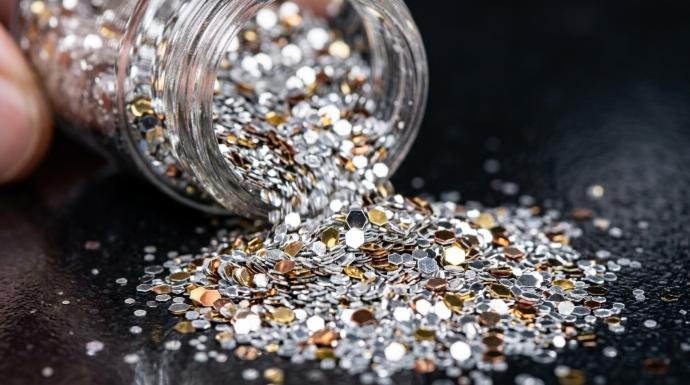
For special applications requiring very high heat resistance (up to 300°C), aluminum-based glitters are also produced — but when you weigh cost against benefit, polyester-based glitter remains the standard choice for textile applications.
Why a hexagonal cut? The ideal shape for glitter particles is a hexagonal cross-section, and that's no coincidence. A shape with many edges lets the particles fuse together closely during application, covering the surface fully without gaps. At the same time, having more facets means light is refracted and reflected more effectively — which is exactly what produces that intense sparkle you're after. Particle size is expressed using an inch-based system, based on the diagonal measurement of the hexagon.
How Is Glitter Printing Applied?
Two main methods are used in practice:
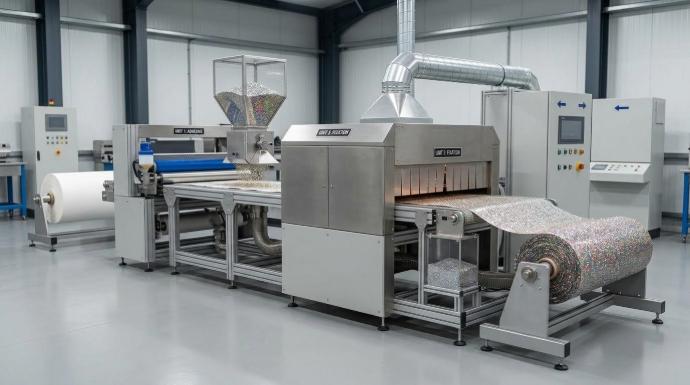
1. Scattering Method An adhesive paste is first applied to the surface in the desired pattern. While the paste is still semi-wet, glitter is sprinkled onto this surface and bonds to it — any excess is cleaned off afterward.
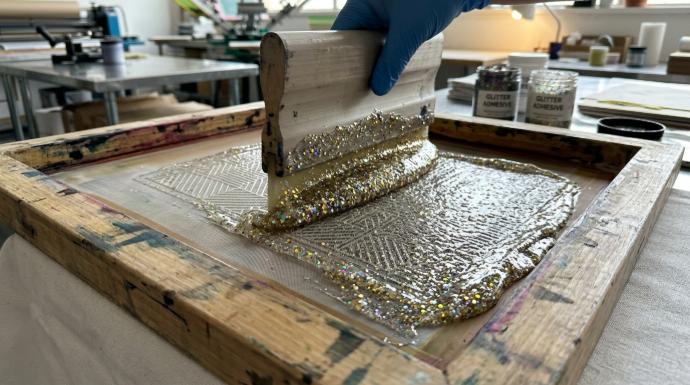
2. Mixing Method Here, glitter is mixed into a transparent paste at roughly 15–30%. This mixture is then applied directly through a pre-prepared patterned screen or die.
Whichever method is chosen, the goal stays the same: fix the glitter firmly to the surface, avoid any loss of shine or color, and make sure the glitter doesn't shed as the product is used — through washing or rubbing.
Key Points for Successful Glitter Printing
Choosing the right adhesive. How well glitter bonds to the fabric largely comes down to the quality of the adhesive used — and this directly determines the print's wash and rub fastness. The wrong adhesive choice can cause a print that looks flawless to shed after just a few washes.
Mesh size. When mixing glitter with adhesive, it's recommended to use a 21T mesh or finer to prevent the holes from clogging.
Drying oven/Fixing conditions. The fixing temperature and time vary depending on the type of paste used:
| Paste type | Temp. | Time |
|---|---|---|
| Su Water-based | 160–170°C | 5 min |
| Plastisol | 150–160°C | 5 min |
| Solvent-based | 130–150°C | 5 min |
Watch out for excessive heat. Applying more heat than necessary during fixing can cause color loss in the glitter — so the logic of "hotter fixes better" doesn't hold here; if anything, it works against you.
Silicone-treated fabrics aren't suitable. Any kind of printing application, glitter included, doesn't produce reliable results on silicone-coated fabrics.
Glitter Options at UES
We work with a wide color range — from silver to dark gold, fuchsia to emerald green, burgundy to dusty rose, and many tones in between. Our glitter is available in 1, 5, and 25 kg packages, so you can order at whatever volume fits your needs.
We also offer both water-based and plastisol adhesive developed specifically for glitter printing — a formulation built for high wash fastness that delivers reliable results when applied under the specified conditions. Pairing the right glitter with the right adhesive is what shows up in your product's durability over its shelf life.
If you're not sure which glitter shade and adhesive combination best fits your product, the UES team is happy to help you work it out reach out via our Contact page .